
CBT and other therapeutic tools for calming your mind and your gut
Written by Anna Katherine Black, PhD
Licensed Clinical Psychologist
GI Psychology
Living with Inflammatory Bowel Disease (IBD) means managing far more than inflammation. It means navigating unpredictability, sudden symptom changes, and the emotional weight that comes with a chronic illness—often shaped by ongoing gut brain axis dysregulation. Many patients describe feeling like they’re always “waiting for the next flare,” and research shows they’re not alone—nearly one-third of people with IBD experience significant anxiety (Barberio et al., 2021).
If you’ve ever felt stressed about your symptoms, only to notice that stress worsening your symptoms, you’ve experienced gut brain interaction in action. The good news? When we understand how the gut brain axis works, we can use it to our advantage. Here we explain why anxiety and IBD often reinforce one another, and how evidence-based IBD mental health support—including CBT and clinical hypnosis—can calm both your mind and your gut.
Understanding the Gut–Brain Connection
Your brain and gut are constantly communicating through what researchers call the gut brain axis—a bidirectional system involving nerves, hormones, and immune pathways.
When you feel stressed or anxious, your brain can heighten pain sensitivity, speed up or slow down digestion, and increase inflammation.
When your gut experiences inflammation or discomfort, your brain may interpret that as a signal of threat, increasing anxiety.
This two-way loop explains why anxiety is so common in IBD and why many patients also experience overlapping brain gut disorders, including Disorders of Gut–Brain Interaction (DGBIs), even when inflammation is controlled.
Why Anxiety Shows Up With IBD
1. The Unpredictability
Flares, sudden pain, urgent bowel movements, and medical procedures can create understandable fear. Over time, the body becomes hyper-alert to symptoms—sometimes even neutral sensations can trigger anxiety.
2. Medical Trauma
Research from the American College of Gastroenterology (ACG) and the Crohn’s & Colitis Foundation shows that repeated hospitalizations, procedures, or complications can lead to trauma symptoms. Up to 33% of IBD patients report symptoms of post-traumatic stress (Petrik et al., 2024).
3. Stress
Stress doesn’t cause IBD, but it does interact with the immune system. Studies have shown that anxiety can worsen pain, contribute to disease flare-ups, and prolong recovery (Slonim-Nevo et al., 2018).
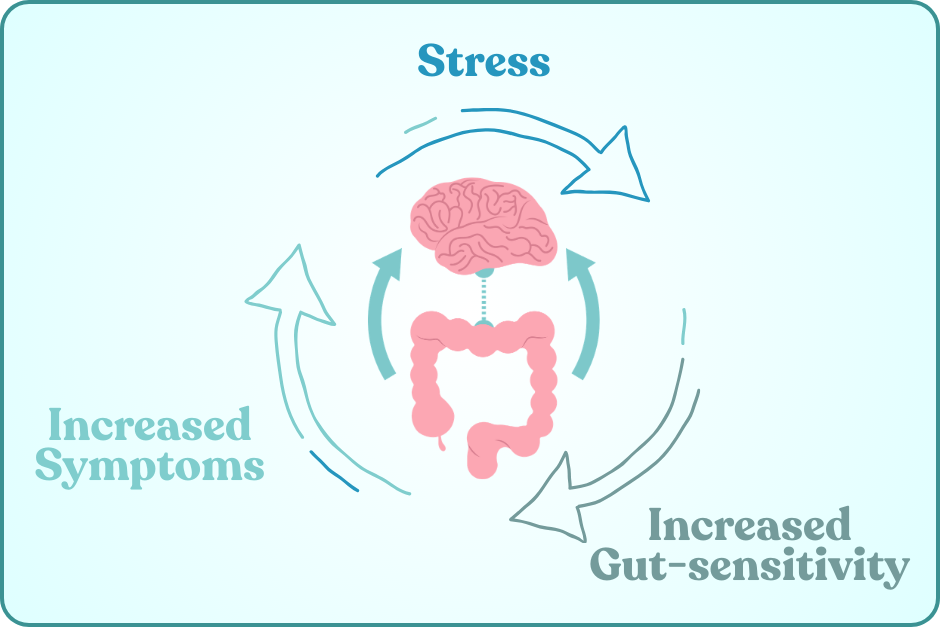
This creates a vicious cycle where stress leads to increased gut sensitivity, which leads to increased symptoms and contributes to more stress: Breaking this cycle is one of the most powerful things you can do for both your mental health and your physical health.
CBT and Other Tools to Calm the Mind and the Gut
Cognitive Behavioral Therapy (CBT) is a structured, skills-based approach widely recommended for managing anxiety and chronic illness. Within GI behavioral health, CBT helps patients understand how thoughts, emotions, and physical sensations influence one another—especially within the gut–brain system.
CBT can help you:
- Reduce health-related anxiety
- Build coping skills for flares
- Improve emotional regulation
- Increase confidence and self-management
Research shows CBT improves quality of life, reduces anxiety and depression, and decreases avoidance behavior in IBD patients (Chen et al., 2021; Sweeney et al., 2021).
Clinical Hypnosis (Gut-Directed Hypnotherapy)
Clinical hypnosis is a medically researched, focused state of attention that helps regulate the gut brain axis. It is one of the most well-studied behavioral approaches used as a disorder of gut-brain interaction treatment, particularly for IBS and overlapping functional symptoms in IBD.
Studies show gut-directed hypnosis can:
- Reduce inflammation markers
- Lengthen remission periods
- Lower stress reactivity
- Improve DGBI symptoms common in IBD
It works by calming the nervous system, reducing fight-or-flight activation, and strengthening gut brain interaction. Many patients describe feeling more regulated and in control.
Conclusion: You Can Feel Better—In Your Mind and Your Gut
Anxiety and IBD influence each other in powerful ways, but that also means there are multiple pathways to interrupt the cycle. Evidence-based approaches within GI Behavioral Health, including CBT and clinical hypnosis, support both physical and emotional healing.
If stress and symptoms have been reinforcing each other, seeking IBD mental health support can help restore a sense of control, confidence, and hope. Adults who are ready to explore evidence-based tools to manage stress and IBD symptoms can enroll in our IBD Psychotherapy Group to explore how therapy, clinical hypnosis, and mind-body strategies can support their journey toward healing.
References
Barberio, B., Zamani, M., Black, C. J., Savarino, E. V., Ford, A. C. (2021). Prevalence of anxiety and depression in IBD. The Lancet Gastroenterology & Hepatology, 6(5), 359–370.
Chen, X., et al. (2021). Cognitive behavioral therapy for adolescents and young adults with IBD: outcomes and quality of life. Journal of Pediatric Psychology.
Gracie, D. J., & Ford, A. C. (2017). IBS symptoms in IBD remission. Clinical Gastroenterology and Hepatology.
Keefer, L., & Keshavarzian, A. (2006). Gut-directed hypnosis for IBD. American Journal of Clinical Hypnosis.
Keefer, L., Palsson, O. S. (2008). Hypnosis for GI disorders. Journal of Psychosomatic Research.
Keefer, L., et al. (2013). Hypnosis and inflammatory markers in IBD. Inflammatory Bowel Diseases.
Mawdsley, J. E., et al. (2008). Hypnosis reduces stress-induced gut inflammation. Biological Psychology.
Palsson, O. S., et al. (2024). Functional GI symptoms in IBD remission. Gastroenterology.
Petrik, J., et al. (2024). Post-traumatic stress in IBD patients. Inflammatory Bowel Diseases.
Sweeney, L., et al. (2021). CBT outcomes for youth with IBD. Journal of Pediatric Gastroenterology & Nutrition.
Taft, T. H., et al. (2011). PTSD in IBD. American Journal of Gastroenterology.
Taft, T. H., et al. (2022). Trauma and DGBIs in IBD. Neurogastroenterology & Motility.
Slonim-Nevo, V., et al. (2018). Psychological distress and IBD exacerbations. Health & Social Work.