
How gut-brain dysregulation contributes to bloating, nausea, and pain—and what recovery looks like
Written by Dr. Antonia Repollet
Licensed Clinical Psychologist
Certified School Psychologist
GI Psychology
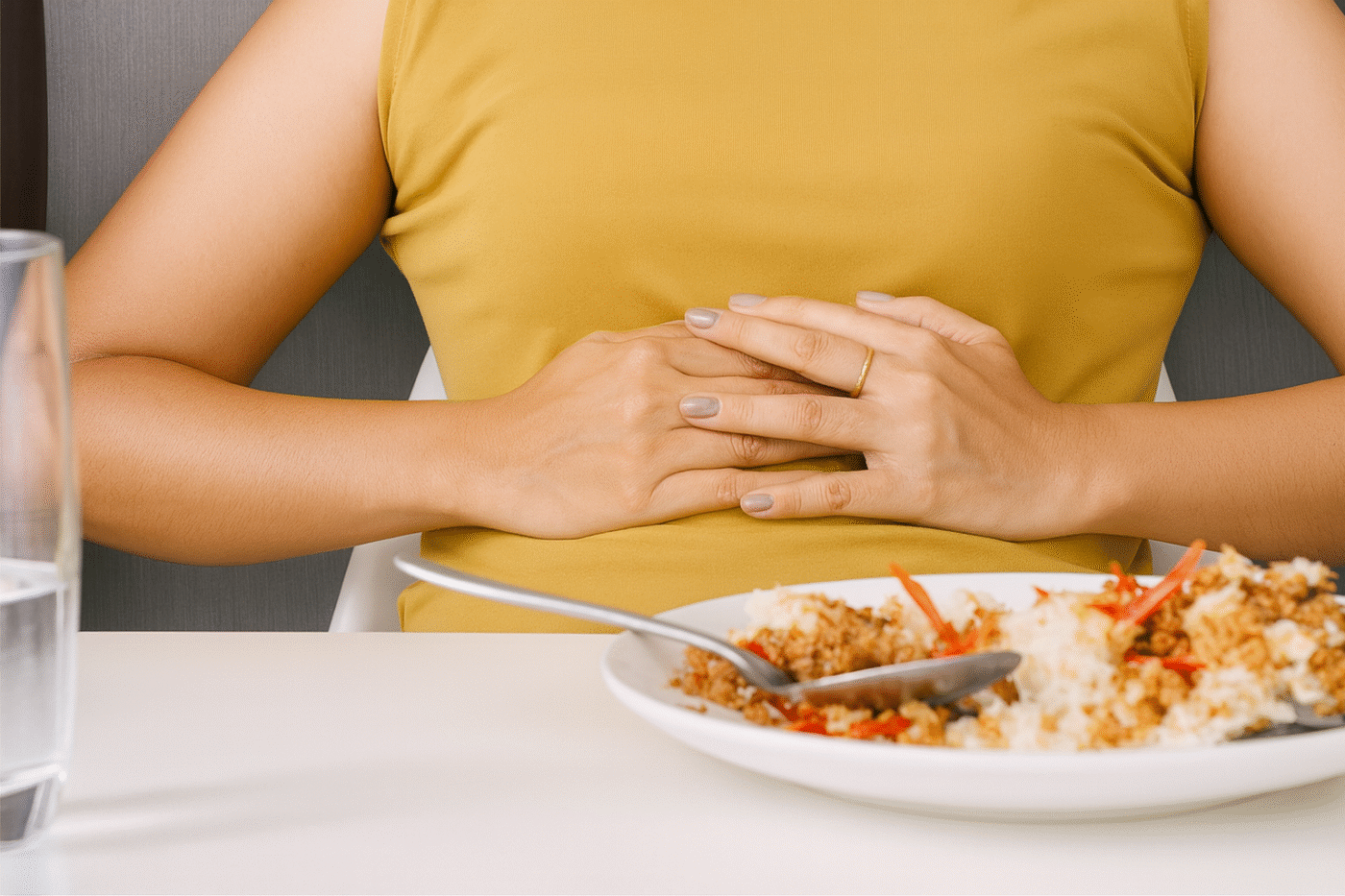
You sit down to eat, but instead of enjoying your meal, your stomach tightens. Maybe you feel bloated, nauseated, or full after just a few bites. The tests all look “normal,” yet your body doesn’t feel that way.
This is often a sign of gut–brain dysregulation — when the communication between your gut and your nervous system gets out of sync.
The Gut–Brain Connection
Your digestive tract and your brain are in constant conversation through a network of nerves, hormones, and immune signals. When that system becomes overly sensitive (often after illness, stress, or long-term digestive changes), even a normal meal can trigger discomfort.
That’s why symptoms like bloating, nausea, early fullness, or abdominal pain can appear without any visible damage or disease. The problem isn’t in your imagination; it’s in the way your gut and brain are interpreting signals.
Why This Happens
When the gut–brain axis is dysregulated:
- The gut muscles may tighten or move irregularly.
- The nerves may become “turned up,” amplifying normal sensations.
- The body may misinterpret normal digestion as pain or pressure.
- Stress and anxiety can make these signals feel even louder.
The result? Meals that once felt comfortable now cause distress, and it can start to feel like your body and mind are working against you.
What Recovery Looks Like
Healing the gut–brain connection takes time, curiosity, and compassion. Treatment usually includes:
- Regulating the nervous system through gut-directed hypnosis, mindfulness, or gentle breathing.
- Supporting digestion with meal pacing, smaller portions, and calming routines before and after eating.
- Gradually rebuilding trust with food rather than restricting out of fear.
- Collaborating with your care team — your GI provider, therapist, and dietitian, so each part of the system gets support.
As the gut and brain relearn how to communicate, symptoms soften. Eating becomes less of a battle and more of a partnership again.
A Gentle Reminder
If you’ve ever thought, “Why does my stomach hate me?” — it doesn’t. It’s just trying to protect you in the only language it knows. Recovery isn’t about forcing your body to behave. It’s about helping your gut and brain learn to speak the same calm language again.
How GI Psychology Can Help
At GI Psychology, we specialize in the intersection of mental health and digestive health, using evidence-based approaches like gut-directed hypnosis CBT for GI, to retrain the gut–brain connection.
Whether you’re navigating post-meal discomfort, IBS, IBD, or another GI condition, our team helps you understand your symptoms, rebuild trust with your body, and create a plan that supports both mind and gut.
Looking for relief from these symptoms? Our 8-week virtual IBD Psychotherapy Group, where adults with Crohn’s and colitis can learn evidence-based tools to manage stress and symptoms. Enroll today!