
Understanding the options for gut-directed hypnotherapy and the power of the gut–brain connection
Written by Anna Katherine Black, PhD
Licensed Clinical Psychologist
GI Psychology

The Gut-Brain Connection: Why It Matters
Your gut and brain are constantly communicating—a two-way street known as the gut–brain axis, often referred to as the gut–brain connection. This link helps explain why stress, anxiety, or even excitement can trigger real physical changes in your digestive system. For people living with conditions like IBS, IBD, or functional nausea, this connection is especially powerful.
Research from the Rome Foundation and the American College of Gastroenterology shows that targeting both mind and body through evidence-based therapies—like gut-directed hypnotherapy—can improve quality of life and reduce symptoms. But today’s question is: what’s the best way to access these treatments—one-on-one with a clinician or through a digital app?
What Is Gut-Directed Clinical Hypnosis?
Clinical hypnosis is a therapeutic technique that uses guided relaxation and focused attention to help the body and mind work together more effectively. Unlike stage hypnosis, clinical hypnosis is safe, evidence-based, and directed by a licensed clinician. It’s used to help regulate the gut–brain axis, reduce pain sensitivity, calm the digestive tract, and ease anxiety or nausea.
One-on-One Hypnosis: Personalized, Flexible, Human, and Trauma-Informed
Working individually with a licensed gut–brain therapist provides a uniquely tailored experience—one that adapts to your medical, emotional, and trauma history.
Every element of a one-on-one gut-directed hypnotherapy session can be customized to meet your needs:
- Language and tone: Some people respond better to simple, direct phrases (“your gut is softening and settling”) while others find comfort in metaphor or sensory imagery. A clinician can adjust the pace and vocabulary so it feels natural and tailored specifically to you and your needs.
- Imagery: Visualizations are crafted around what feels safe and soothing to you. For example, while one person may find calm in imagining a gentle ocean wave, another with a history of drowning or panic may prefer imagery centered on warmth, light, or steady breathing. This kind of adjustment is vital in trauma-informed care, helping avoid unintentional distress while still activating the body’s relaxation response.
- Session pacing: A therapist modifies the depth and length of trance to match your comfort level and symptom needs. A child with procedure anxiety might benefit from shorter, playful imagery, while an adult with chronic abdominal pain might need longer, deeper sessions.
- Focus and evolution: Sessions shift over time—from calming flares to building self-efficacy or managing medical procedure anxiety—based on your progress.
Trauma sensitivity is key because many people with IBD or functional GI disorders have experienced medical trauma (e.g., repeated hospitalizations, invasive procedures, or distressing bodily sensations). The Crohn’s & Colitis Foundation reports that trauma can heighten gut sensitivity and anxiety, making a gentle, individualized approach crucial.
These individualized sessions, often offered via telehealth, allow you to engage from the privacy of home while still benefiting from clinical oversight and care. Working with a trained clinician also allows treatment to evolve alongside your symptoms, triggers, and personal goals.
Digital Apps: Accessible and Convenient
Digital platforms like Nerva and GastroGirl, supported by the Rome Foundation, make hypnosis for IBS and gut–brain conditions widely available at lower cost and on your schedule.
These apps guide users through structured, research-based programs using audio sessions developed by gut-brain experts. Digital gut-directed hypnotherapy programs, including those that informed the Nerva app, have been evaluated in randomized controlled trials showing significant improvements in IBS symptom severity and psychological outcomes such as anxiety and quality of life after a six-week program (Peters et al., 2021).
Benefits include:
- Flexibility: Practice daily hypnosis wherever you are.
- Affordability: Subscriptions often cost less than an individual therapy session.
- Consistency: Built-in reminders encourage regular practice.
However, digital hypnosis tends to work best for people who are self-motivated and already comfortable with relaxation or mindfulness practices. Individuals with complex symptoms, medical trauma, or overlapping conditions may benefit more from personalized gut-directed hypnotherapy with a clinician.
Which Is Right for You?
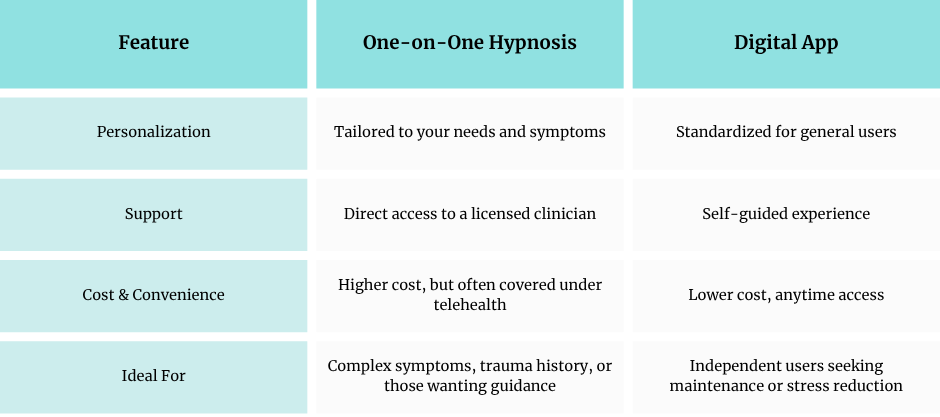
Tip: Some patients combine both—starting with clinician-guided gut-directed hypnotherapy and then using apps to maintain progress between visits.
Takeaways
- The gut–brain axis plays a powerful role in digestive symptoms and overall health.
- Gut-directed hypnotherapy is evidence-based and can reduce pain, nausea, and flare risk.
- One-on-one hypnosis offers personalized care and emotional support through telehealth.
- Digital apps provide flexible, accessible tools for ongoing self-management.
If you’re unsure where to begin, talk with your gastroenterologist or a licensed gut–brain therapist. The Crohn’s & Colitis Foundation, Rome Foundation, and GI Psychology can help you connect with trained professionals.
Ready to Learn More?
It’s time to discover how mind-body care can transform your gut health. Explore our resources, schedule a free 15-minute phone consultation, or reach out at admin@gipsychology.com.
References
Barberio, B., et al. (2021). Prevalence of anxiety and depression in IBD: A meta-analysis. Alimentary Pharmacology & Therapeutics.
Keefer, L., Palsson, O., & Ballou, S. (2013). Hypnosis for gastrointestinal disorders: Evidence base and future research directions. American Journal of Clinical Hypnosis, 56(1), 20–37.
Paulton, M., et al. (2021). Randomized controlled trial of gut-directed hypnotherapy for IBS delivered digitally. Gastroenterology, 160(7), 2196–2207.
Peters, S. L., et al. (2021). Randomized clinical trial: Digital gut-directed hypnotherapy for IBS. Alimentary Pharmacology & Therapeutics, 54(2), 160–171.
Rome Foundation. (2023). Disorders of Gut-Brain Interaction: A Rome IV overview.
Crohn’s & Colitis Foundation. (2024). Behavioral Health and IBD Resource Guide.
American Psychological Association. (2024). Clinical hypnosis in evidence-based practice.